Rubbish Removal London- Same Day Waste & Junk Clearance

Have you decided it’s time for a new kitchen? Are you wondering how to remove your old kitchen cabinets without causing unnecessary damage or stress?
Many homeowners face this stage when planning a renovation, yet few know the safest and most efficient way to dismantle cupboards, worktops, and appliances.
Removing kitchen cabinets can be done as a DIY task, but it requires preparation, the right tools, and an understanding of the process.
Whether you intend to sell your old kitchen, recycle parts, or simply dispose of the units responsibly, doing the job carefully will save both time and money.
Why Should You Remove Kitchen Cabinets Properly?
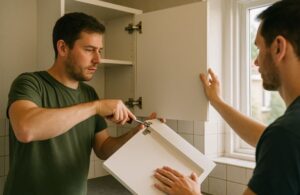
It may be tempting to rip everything out quickly, but an organised approach pays off. Cabinets can last for decades, yet over time they become stained, outdated, or damaged.
Taking the time to remove them correctly helps you protect your walls, tiles, and flooring, while also allowing you to reuse or resell parts if they remain in good condition.
For those planning to sell their old kitchen, careful removal is particularly important. A dismantled but intact kitchen can be listed for resale or donated to charities that specialise in reusing building materials.
Even if resale is not your goal, proper removal makes disposal cleaner and avoids unnecessary repairs before the new kitchen is fitted.
What Preparations Should Be Made Before Starting?
Before you begin dismantling any part of the kitchen, it is important to make the space safe and workable.
The first step is shutting off electricity, gas, and water supplies. All appliances should be disconnected safely, and where they are hard-wired or connected to gas, only a qualified professional should carry out the work.
Planning disposal is equally essential. Depending on the size of your kitchen, you may need to hire a skip or arrange for a rubbish removal service to collect the waste. Thinking ahead about waste clearance avoids delays once the dismantling has begun.
Another practical preparation is setting up a temporary kitchen space. Renovations often last several weeks, so relocating a fridge, microwave, kettle, and basic utensils to another room ensures daily life continues.
Some homeowners prepare by batch cooking meals in advance and freezing them, while others make use of simple meals that can be cooked quickly in a microwave.
What Safety Precautions Are Needed?

Working in a kitchen removal project involves sharp tools, heavy lifting, and dust. Safety precautions should therefore not be overlooked.
Protective gloves, safety goggles, and dust masks help guard against debris. Sturdy footwear is recommended to avoid accidents when carrying heavy units.
If you are removing tiles or sawing through sealants, eye protection is particularly important. Additionally, wearing clothing that you do not mind damaging will make the process more comfortable.
How Do You Remove Appliances Before the Cabinets?
Appliances should always be removed first to clear space and avoid damage. Small appliances such as kettles and toasters can simply be unplugged and moved. Larger items require more care.
Ovens and hobs are sometimes hard-wired into the electrical system, which means they cannot simply be unplugged.
A qualified electrician must be contacted to disconnect these safely. The same applies to gas hobs and ovens, which must only ever be disconnected by a Gas Safe registered engineer.
Dishwashers and washing machines often contain water in their hoses. These should be carefully detached with the help of a second person to keep the pipes upright and avoid spills.
Fridges and freezers may have specific disposal requirements due to refrigerant gases, and local councils usually provide information about how to dispose of them.
Sinks are another part of this stage. Once the water supply is off, the plumbing can be disconnected, and the sink gently lifted out after sealant around the edges has been cut away.
How Do You Remove Worktops and Tiles?
Worktops are generally fitted with bolts or mitred joints underneath. These must be undone before attempting to lift the surface.
It is also common to find sealant holding the worktop to the wall or cabinets, which should be cut with a utility knife. With two people, the worktop can then be lifted away carefully.
If tiles sit directly above the worktop, the lowest row often has to be removed before the surface can be taken out. Removing tiles requires patience and proper protection. Using a bolster and hammer, tiles can be loosened and lifted away, but sharp edges make gloves and goggles essential.
How Do You Remove Cabinet Doors and Drawers?
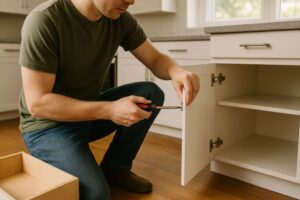
Cabinet doors and drawers add unnecessary weight, so they should be removed before the units themselves. Start by emptying the cupboards entirely.
Doors can then be taken off by unscrewing the hinges or using release clips if available. Drawers may either lift out of runners or need small securing clips to be undone before they can be removed.
Removing these components first makes the main cabinets lighter, easier to manoeuvre, and safer to handle.
How Do You Remove Kitchen Wall Cabinets?
Wall cabinets are heavier than they look, and removing them is easier with two people.
Step 1: Empty and Prepare
Clear all contents and shelves from the cupboard. Any sealant or paint around the edges should be cut with a utility knife.
Step 2: Detach from Neighbouring Units
If cabinets are joined together, unscrew any connecting fixtures between them.
Step 3: Unscrew from the Wall
Wall cabinets are usually held by at least four screws into wall studs or brackets. While one person supports the weight, the other should unscrew these fixings.
Step 4: Lower Safely
It is often useful to rest the cabinet temporarily on the worktop before lifting it fully to the floor. Placing a towel or sheet below prevents scratches.
How Do You Remove Kitchen Base Cabinets?
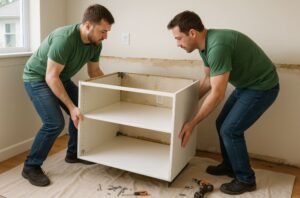
Base units, resting on the floor, require a slightly different approach.
Step 1: Remove Shelves and Drawers
Just as with wall cabinets, take out everything inside first to make the units lighter.
Step 2: Disconnect the Sink and Appliances
If the sink has not yet been removed, this should be done now by detaching the plumbing. Built-in appliances such as dishwashers also need to be uninstalled before moving on.
Step 3: Release Worktop Connections
The worktop may still be attached with sealant or caulk at the back and sides. Cutting through these connections makes the base units easier to move.
Step 4: Remove Fixings
Most base units are screwed into the wall and also fixed to each other. Unscrewing these allows each unit to be taken out individually.
Step 5: Lift Out the Units
With a partner, lift each cabinet out of position and move it onto protective sheets or a trolley for removal from the property.
How Do You Handle Cabinets Fixed with Glue or Trim?
Older kitchens are sometimes glued directly to walls or sealed with strong adhesives. In such cases, unscrewing alone will not release the units.
Carefully running a utility knife or using a crowbar to separate the cupboard from the wall is usually required. Trims can also be prised away with care to free the unit.
This method demands patience, as pulling too forcefully can tear plaster or damage tiles.
How Can You Dispose of Old Kitchen Cabinets in the UK?

Once removed, the cabinets and appliances must be dealt with responsibly. Some homeowners donate intact cupboards to charities, while others resell them online. Recycling centres also accept wood, metal, and some plastics.
Where kitchens are large or the waste bulky, professional rubbish removal services provide an efficient solution.
At Rubbishremoval.uk, we not only collect and dispose of old cabinets but also ensure materials are recycled wherever possible. This saves time, reduces physical effort, and offers an eco-friendly alternative to skip hire.
Conclusion: What Is the Best Way to Remove Kitchen Cabinets?
The best way to remove kitchen cabinets is to approach the task step by step, beginning with utilities and appliances, followed by worktops, wall units, and finally base cabinets. Preparation and safety precautions are vital, as is having a plan for disposal once the kitchen is dismantled.
For homeowners who wish to save time, avoid lifting, or ensure eco-friendly disposal, we at rubbishremoval.uk offer a professional service.
From dismantling to recycling, our team handles the entire process, leaving you free to focus on designing your new kitchen.
FAQs
Do I need a professional to disconnect gas and electrics before cabinet removal?
Yes. Gas and hard-wired electrical connections must always be handled by qualified tradespeople.
Can I resell my old kitchen?
Yes. If removed carefully, complete kitchens can be sold or donated to reuse charities.
How long does it take to remove a kitchen?
Smaller kitchens may take a day, while larger or more complex layouts can take two to three days.
How should I dispose of a fridge or freezer?
These require special disposal due to refrigerants. Check your council’s rules or use a licensed waste removal service.
Is it possible to live in the home while the kitchen is removed?
Yes, but setting up a temporary kitchen with essential appliances makes life much easier.
Does removing a kitchen create a lot of mess?
It can, but careful dismantling and protective sheets will limit the disruption.
Should I hire a rubbish removal service?
If you want a fast, eco-friendly option, services like Rubbishremoval.uk are ideal.