Rubbish Removal London- Same Day Waste & Junk Clearance

Broken glass is more than an inconvenience, it poses a real risk to health, safety, and the environment. From shattered household items to damaged window panes, glass waste must be handled carefully to prevent accidents.
In the UK, local authorities set strict rules on how glass can be recycled or disposed of, and ignoring them may create hazards or fines.
Learning the proper methods ensures protection for your household, waste collectors, and the environment. Here’s a practical guide on how to dispose of broken glass the right way.
Why is Broken Glass Dangerous in Household Waste?
Broken glass is hazardous because its sharp edges can easily cause cuts and injuries. When thrown directly into household bins, it poses risks not only to the person disposing of it but also to waste collection teams who may not see the hidden shards. These injuries can lead to infections and accidents during handling.
- Sharp edges can slice through bags, creating risks of cuts.
- Pets or wildlife may be harmed if bags split open outdoors.
- Mixed glass fragments can contaminate recycling streams, making entire batches unusable.
Improper disposal also means glass can end up in landfill unnecessarily, increasing environmental harm.
In short, broken glass is not ordinary rubbish, it requires extra care and responsibility to manage safely within UK waste systems.
How to Dispose of Broken Glass the Right Way?
Disposing of glass properly protects people, pets, and the environment. It also ensures that recycling centres can handle the material correctly without contamination. Below are the most effective and approved ways to get rid of broken glass safely in the UK.
1. Wrap Broken Glass Securely Before Disposal

The first and most essential step in disposing of broken glass is wrapping it securely. Loose shards are extremely dangerous if left unprotected.
Wrapping them in thick, durable material ensures they do not pierce through rubbish bags or injure anyone handling the waste.
Safe Wrapping Materials:
- Layers of newspaper or old magazines
- Thick cardboard pieces taped tightly around the shards
- Strong plastic bags double-wrapped for extra protection
When wrapping, it is recommended to:
- Place all small pieces inside a bundle of paper or cardboard.
- Tape the wrapping securely so no fragments can slip out.
- Write “Broken Glass” clearly on the package to alert waste collectors.
Labelling is especially important, as it prevents accidents during collection and handling. For families with children or pets, wrapping and labelling also helps keep everyone safe indoors until the waste is collected.
This step might feel simple, but it makes a major difference in safety and ensures compliance with council waste management practices. By starting with secure wrapping, households reduce the chance of accidents and contribute to safer, cleaner waste handling processes.
2. Place Shards in a Strong, Puncture-proof Container
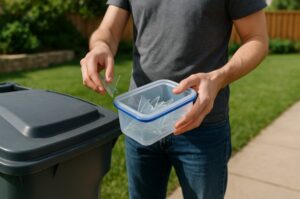
Beyond wrapping, another secure method is placing broken glass in a sturdy container. Containers add an extra layer of protection, ensuring even sharp fragments stay contained.
Recommended Containers:
- Rigid cardboard boxes
- Thick plastic tubs with lids
- Empty jars or tins with tightly sealed tops
How to use them properly?
- Always line the container with newspaper before filling it with shards.
- Avoid overfilling, leave space so the container can be closed securely.
- Once filled, seal the lid with tape or shut the box tightly.
Using a strong container reduces risks for waste collectors, especially since plastic bags alone can tear easily. Rigid containers can also be placed safely in outdoor bins without spilling or puncturing.
This approach is particularly useful for larger pieces that could otherwise pierce through wrapping. It also helps keep glass fragments in one place, making disposal much more manageable. Combined with wrapping, a container provides the highest level of safety during disposal.
3. Take Broken Glass to a Local Recycling Centre

Recycling centres in the UK are designed to handle different waste types, including glass. While not all centres accept broken household glass, many allow items like bottles, jars, and some window glass if prepared correctly.
Steps before taking glass to a recycling centre:
- Check your local council’s website to confirm what types of glass are accepted.
- Place all broken items in a secure box or container for safe transport.
- Separate recyclable glass (like bottles) from non-recyclable items (like mirrors or pyrex).
Benefits of using recycling centres:
- Keeps glass out of general waste streams.
- Supports sustainable recycling, turning waste into new products.
- Safer disposal as centres have equipment designed for sharp materials.
It is important to note that not all broken glass qualifies for recycling. Items such as toughened glass, ceramics, and mirrors often need to be disposed of separately. Recycling centres, however, provide clear guidance and often have dedicated bins for specific types of glass waste.
By choosing this method, households can dispose of their glass responsibly and contribute to the UK’s recycling goals.
4. Arrange a Special Council Collection Service
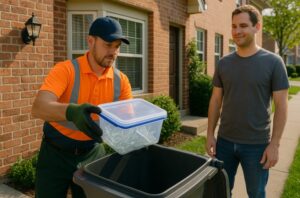
Many local councils across the UK provide special collection services for bulky or hazardous waste, including broken glass. This option is particularly useful when dealing with larger items like broken windows or heavy glass furniture.
How it works?
- Residents book a collection online or via phone.
- The council provides guidelines on how to package and prepare the glass.
- Collection is done separately from regular household waste.
Advantages of council collection:
- Ensures compliance with local waste disposal regulations.
- Safe and reliable as collectors are trained for handling glass.
- Convenient for households with large or difficult-to-manage items.
This method reduces the risks of trying to transport large glass items personally. Councils often recycle what they can, ensuring eco-friendly disposal. However, it’s important to follow instructions carefully, for instance, wrapping or boxing smaller pieces before collection.
Special collections may come with a small fee, but the safety and peace of mind are worth it. Choosing this service ensures that broken glass is dealt with responsibly and without danger to household members or waste handlers.
5. Hire Our Professional Rubbish Removal Service at RubbishRemoval.uk
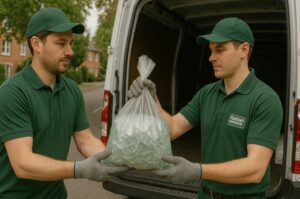
Professional rubbish removal is one of the safest and most convenient ways to dispose of broken glass, especially when there is a large quantity or oversized pieces.
What to expect when booking with us?
- Trained professionals arrive at your property at a scheduled time.
- All glass is carefully collected, wrapped, and removed.
- We transport waste to approved recycling or disposal facilities.
Why choose us?
- Safety: Our teams are trained to handle sharp and hazardous waste.
- Convenience: No need to worry about packaging or transport.
- Eco-friendly: We ensure recyclable glass is processed responsibly.
- Reliability: Fast, hassle-free service designed for households and businesses.
This service is especially useful for people who may not have the means to transport large or heavy glass themselves. It also eliminates the risks associated with handling glass waste.
By hiring the professionals at rubbishremoval.uk, households ensure compliance with regulations and enjoy peace of mind knowing the job is handled correctly.
When in doubt, professional help is the most secure and stress-free option for glass disposal.
6. Dispose of Large Glass Sheets or Window Panes Properly

Large glass sheets, mirrors, and window panes pose unique challenges because of their size and sharp edges. They cannot simply be placed into bins or bags like smaller fragments.
Safe methods for large glass disposal:
- Wear protective gloves and goggles when handling.
- Use duct tape across the surface of the glass to prevent shattering.
- Wrap panes in thick blankets or cardboard before moving.
Options for disposal
- Arrange council bulky waste collection.
- Contact professional rubbish removal for safe handling.
- Deliver securely wrapped panes to an approved recycling centre.
Large panes often require two people to handle safely, as they can break further during movement. Transporting them alone is not advisable. Proper preparation and professional help significantly reduce risks.
Taking the time to secure large sheets ensures they do not become hazardous during transit or disposal. This approach keeps everyone safe while ensuring compliance with UK disposal guidelines.
7. Avoid Mixing Broken Glass With Household Recycling or Food Waste
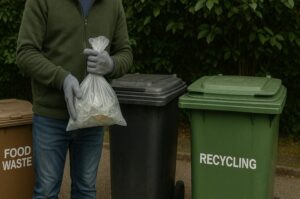
One of the most common mistakes people make is mixing broken glass with household recycling or general waste. This practice is both unsafe and environmentally damaging.
Why avoid mixing?
- Broken glass can contaminate entire recycling loads, rendering them unusable.
- It creates risks for workers at recycling plants when sharp shards are hidden among other waste.
- Food waste and liquids make glass even more dangerous to separate.
Correct practices:
- Always wrap and label broken glass separately.
- Do not place broken crockery, pyrex, or mirrors in regular recycling bins.
- Use designated council collection or professional services for disposal.
Mixing glass into ordinary waste is a shortcut that often causes more harm than good. The safest solution is to treat broken glass as a separate waste stream. By doing so, households not only prevent accidents but also support the recycling process.
When in doubt, keep glass separate and use the appropriate disposal method. This ensures maximum safety and environmental benefit.
What Types of Glass Can Actually Be Recycled in the UK?
Not all glass can be recycled. In the UK, recycling centres primarily accept bottles and jars, while other forms of glass need special disposal methods. Ordinary household recycling bins should not be used for broken glass unless the council confirms it is acceptable.
Recyclable Glass | Non-Recyclable Glass |
Glass bottles and jars | Mirrors and window panes |
Clear and coloured glass | Pyrex and heat-resistant glass |
Food and drink containers | Ceramics and light bulbs |
Understanding the difference ensures that recyclable glass goes to the right place, while non-recyclable items are handled responsibly. Always check local council rules before disposal.
How Can People Reduce Glass Waste at Home?
Reducing glass waste at home is as important as disposing of it correctly. Prevention and reuse can go a long way in lowering the amount of glass ending up in landfills.
Practical tips to reduce glass waste
- Store glassware securely to avoid accidental breakages.
- Reuse glass jars for storage, DIY projects, or as containers.
- Choose durable glass products that are less prone to breaking.
- Consider alternatives like stainless steel or strong plastics for everyday use.
Making conscious decisions around buying and reusing glass products helps reduce the risk of broken glass in the first place. This not only protects households from potential injuries but also lowers the burden on waste management systems.
By reducing, reusing, and recycling where possible, households in the UK can make a significant impact on sustainable glass waste management.
Is Professional Rubbish Removal Worth It for Broken Glass?
Hiring a professional rubbish removal service is often the most reliable and safe option for disposing of broken glass. These services are equipped with the right tools and training to handle dangerous waste efficiently.
For large items, heavy panes, or substantial amounts of broken glass, professionals can save households the time and risk involved in disposal.
In addition, professional services ensure that recyclable materials are separated and sent to appropriate facilities, supporting eco-friendly practices.
For anyone seeking convenience, compliance, and peace of mind, professional rubbish removal is a worthwhile solution.
Conclusion
Proper disposal of broken glass is about more than following rules, it’s about protecting people and the environment. From wrapping shards securely to hiring professional services, each method ensures safety at every stage.
Knowing what types of glass can be recycled, avoiding common mistakes, and reducing waste at home all contribute to better waste management.
By following the right steps, households in the UK can dispose of broken glass responsibly, keeping communities safer and supporting a cleaner future.
Frequently Asked Questions
What should you never do when disposing of broken glass?
Never place broken glass loosely in a bin, as it can cut through bags and injure waste collectors. Always wrap or contain it securely before disposal.
Can broken drinking glasses or mirrors go into the recycling bin?
No, broken glasses and mirrors are not recyclable through household bins. They must be disposed of separately following council guidelines.
How do you safely clean up smashed glass on the floor?
Sweep carefully with a brush and dustpan, then use a damp cloth to collect tiny shards. Always wear protective gloves during cleanup.
Is there a difference between disposing of window glass and bottle glass?
Yes, bottles and jars can often be recycled, while window glass usually requires special disposal due to its composition. Councils advise accordingly.
What happens if broken glass ends up in general waste?
It can cause injuries to waste handlers and contaminate other waste. This reduces safety and prevents recycling from being carried out properly.
Can local councils fine you for incorrect glass disposal?
Yes, fines may apply if waste disposal rules are not followed. Councils enforce these rules to ensure safety and protect recycling processes.
What are the safest packaging materials for wrapping broken glass?
Thick cardboard, newspapers, or strong plastic bags are safest. Sealing and labelling the package as “Broken Glass” prevents accidents during handling.