Rubbish Removal London- Same Day Waste & Junk Clearance

Have you ever wondered why professionals insist that a fridge freezer should be defrosted before it is taken away for disposal?
At first glance, it might seem like an unnecessary extra step, particularly if the appliance is old or broken. Yet, the process is vital for several reasons, both practical and regulatory.
When a fridge freezer is not defrosted before clearance, the built-up ice inside begins to melt during transport. This excess water can leak out, causing damage to floors, carpets, or even other furniture being removed at the same time.
Worse still, the lingering moisture often leads to unpleasant odours that quickly spread to nearby items. From a hygiene perspective, defrosting reduces the risk of bacteria or mould developing once the appliance has been moved.
In the UK, rubbish clearance companies must also adhere to waste disposal regulations. Fridge freezers are classified as hazardous waste under the WEEE (Waste Electrical and Electronic Equipment) directive, meaning they must be handled with care.
A unit that has not been defrosted may complicate the process for waste handlers, making recycling less efficient. By defrosting in advance, households not only make collection easier but also ensure that the appliance can be recycled responsibly.
How Should You Prepare Your Fridge Freezer for Defrosting?
Preparation is the foundation of a smooth defrosting process. Rushing into it without taking the right steps often leads to unnecessary mess, spoiled food, or even damage to the appliance. The goal is to make the freezer safe to handle while ensuring that the defrosting itself is as efficient as possible.
To prepare properly, a few essential actions should be followed:
- Unplug the appliance: Always disconnect the fridge freezer from the mains to avoid electrical risks and allow the temperature to rise gradually.
- Clear out the contents: Remove all food, storing perishables in a cool box with ice packs or consuming them before starting.
- Protect the floor area: Place towels, plastic sheets, or absorbent mats around the base to catch dripping water as the ice melts.
- Remove internal parts: Take out drawers, shelves, and trays to prevent cracking and to make cleaning easier later.
Once these steps are completed, the appliance is ready for whichever defrosting method is chosen. Proper preparation not only keeps the kitchen tidy but also ensures the fridge freezer can be collected for rubbish clearance without any hygiene or safety issues.
What Are the Step-By-Step Methods to Defrost a Fridge Freezer?
Defrosting a fridge freezer can feel like a daunting job, especially if the ice build-up is significant, but following a clear method makes the process manageable.
There are several approaches households can use, each with its own advantages. The choice depends on how much time is available before rubbish clearance and how urgently the appliance needs to be prepared.
1. Natural Air Defrosting
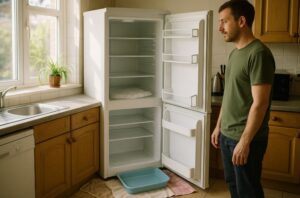
The most straightforward and widely recommended method is natural air defrosting.
- How it works: Once the fridge freezer is unplugged and the doors are opened, room temperature air gradually melts the ice inside.
- Timeframe: Depending on the size of the unit and the thickness of the frost, this can take anywhere between 12 to 24 hours.
- Best use: This method works best when households have at least a full day before the rubbish clearance team arrives.
Although it is time-consuming, natural defrosting is the safest option because it involves no external tools or heat sources that could damage the appliance. Placing towels around the base and trays underneath the appliance helps to catch the water as the ice melts.
2. Hot Water Bowl Method
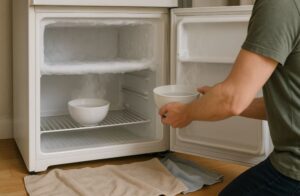
For those needing faster results, steam can significantly reduce defrosting time.
- How it works: A bowl or pan of boiling water is placed inside the freezer compartment, and the door is closed. The steam softens the ice, causing it to loosen and melt more quickly.
- Timeframe: Depending on the level of frost, this method usually works within 1 to 4 hours.
- Maintenance: The water cools down fairly quickly, so it must be replaced every 15–20 minutes to keep steam circulating effectively.
This technique is particularly effective in smaller freezers or when only moderate ice build-up needs to be removed. However, households should take care not to overfill the bowl, as spills can create unnecessary mess.
3. Fan-Assisted Defrosting

Another quicker option is to use circulating air.
- How it works: A portable fan is positioned in front of the open freezer. The movement of warm air speeds up melting by reducing the temperature difference between the ice and the room.
- Timeframe: Usually between 2 and 5 hours, depending on how cold the surrounding room is.
- Best use: Particularly effective during warmer weather or in well-heated rooms.
This approach does not require constant supervision, making it more convenient for households who prefer not to keep checking on the appliance.
4. Built-in Auto-Defrost Systems
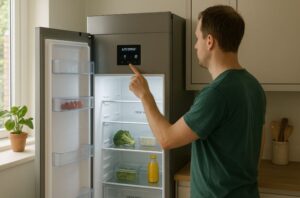
Modern fridge freezers often include automatic defrost functions.
- How it works: These units are designed to reduce frost build-up continuously, often by cycling warm air through the interior.
- Timeframe: Because the appliance maintains itself, there is rarely a need for extensive manual defrosting.
- Considerations: Even with auto-defrost systems, it is advisable to switch off and fully clean the appliance before rubbish clearance to ensure it is dry and odour-free.
Important Safety Notes
Regardless of which method is chosen, there are universal safety rules that must be followed:
- Never use sharp objects such as knives or screwdrivers to chip away ice, as this can puncture the coils and release harmful gases.
- Always unplug the appliance before starting to avoid electric shock.
- Ensure that water is collected and removed promptly to prevent leaks and slips around the kitchen.
How Long Does It Usually Take to Defrost a Fridge Freezer?
Time is often the main concern for households preparing a fridge freezer for clearance. There is no fixed answer, as it depends on the chosen method and the condition of the appliance. To provide clarity, the table below compares the most common approaches:
Method | Average Time Required | Suitability |
Natural air defrosting | 12–24 hours | Best for planned clearance, very safe |
Hot water bowl method | 1–4 hours | Faster, requires monitoring |
Fan-assisted circulation | 2–5 hours | Effective in warm indoor environments |
Built-in auto-defrost unit | Ongoing maintenance | Minimal manual effort needed |
Households should always allow for extra time in case the ice build-up is heavier than expected. For clearance appointments scheduled with professional rubbish removal services, beginning the process a full day in advance ensures the fridge freezer is dry and ready to be moved.
How Do You Prepare a Defrosted Fridge Freezer for Rubbish Clearance?
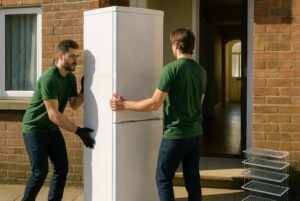
Once the ice has melted and the appliance has been cleaned, further steps must be taken before the fridge freezer can be collected. This stage is often overlooked, yet it plays an essential role in protecting both the property and the clearance team.
The most important step is drying. Even a small amount of leftover water can drip during transit, leading to mould or musty smells later on.
Wiping the appliance thoroughly with a dry cloth and leaving the doors open for a few hours prevents this. Cleaning with a mild detergent also removes any lingering odours from spoiled food, making the appliance more pleasant to handle.
Next comes securing the appliance. Fridge freezers contain loose shelves, drawers, and door compartments that can shift during transportation. Using tape or rope to secure the doors shut prevents accidents and makes moving easier.
Finally, the unit should always be kept upright when being transported, as laying it down risks damaging the compressor. These small precautions make rubbish clearance smoother and safer.
What Are the UK Rules for Fridge Freezer Disposal During Rubbish Clearance?
Disposing of a fridge freezer in the UK is not as simple as leaving it out for general rubbish collection. These appliances are classed as hazardous waste because of the refrigerant gases, insulation materials, and electrical components they contain.
For that reason, there are strict rules in place to ensure they are handled in a way that protects both the environment and public health.
The most important rules that households need to be aware of are:
- WEEE Regulations apply: Under the Waste Electrical and Electronic Equipment directive, fridge freezers must be recycled or disposed of by an approved and licensed facility.
- No fly-tipping: It is illegal to abandon a fridge freezer on the street, in communal areas, or in the countryside. Doing so can lead to heavy fines.
- Licensed carriers only: If using a rubbish clearance company, they must be registered waste carriers with the Environment Agency. This ensures the appliance is transported and processed legally.
- Council or recycling centre services: Local councils and household waste recycling centres provide collection or drop-off points where appliances are dismantled and recycled safely.
- Hazardous gases handled correctly: The gases and oils inside fridge freezers must be extracted by trained professionals to prevent environmental harm.
By following these rules, households not only stay compliant with the law but also support eco-friendly practices. Choosing a licensed clearance service is often the most convenient option, as they will handle all of the requirements on behalf of the homeowner while ensuring full legal compliance.
What Mistakes Should You Avoid When Defrosting Before Clearance?

Although defrosting is a straightforward task, certain mistakes are surprisingly common. These errors not only create unnecessary mess but may also damage the appliance or cause safety issues.
- Using sharp objects: Many people try to chip away thick ice with knives or screwdrivers, but this can puncture the internal cooling system, releasing dangerous gases.
- Rushing the process: Defrosting takes time, and moving the appliance while it still contains water can lead to leaks.
- Failing to dry the unit: Moisture left inside quickly develops mould, creating hygiene issues.
- Leaving food behind: Forgotten items can rot during transport, leaving a strong odour that is difficult to remove.
By avoiding these pitfalls, households can ensure that their appliance is ready for safe and efficient clearance.
Conclusion
Defrosting a fridge freezer before rubbish clearance is not simply about convenience. It ensures hygiene, prevents property damage, and supports legal and environmentally responsible disposal.
While the process requires some planning, the effort pays off by making collection smoother and reducing potential complications for waste handlers.
For households in the UK, the message is clear: prepare the appliance in advance, follow safe defrosting methods, and ensure the unit is completely dry before removal.
Those who do not have the time or resources to handle the process themselves should consider hiring a licensed Rubbish Collection Service like rubbishremoval.uk. At Rubbish Removal London, we not only collect and recycle the appliance but also guarantee that disposal complies with UK regulations.
FAQs on Fridge Freezer Defrosting and Rubbish Clearance
How often should a fridge freezer be defrosted?
Most manual defrost models require attention every six months, or whenever the ice layer exceeds half a centimetre.
Can I use a hairdryer to speed up defrosting?
It is strongly discouraged. The concentrated heat can warp or damage internal parts and creates an electrical hazard.
What should I do with food during the defrosting process?
Food should be stored in a cool box with ice packs. Alternatively, it can be consumed before the process begins.
Do I need to clean my fridge freezer before disposal?
Yes. Cleaning ensures that the appliance is safe and hygienic to handle, particularly for clearance teams.
How do UK regulations affect fridge freezer clearance?
The WEEE directive requires that fridge freezers are recycled safely. This prevents harmful substances from being released into the environment.
What’s the difference between recycling and rubbish clearance?
Recycling centres process the appliance directly, whereas rubbish clearance companies collect and transport the appliance on your behalf.
Can a rubbish clearance company take care of fridge freezer defrosting?
Most companies expect the appliance to be defrosted in advance. However, some may offer assistance for an additional charge.